


After watching this drama and even after rewatching it so many times, there’s still this quiet kind of feeling upon the realization that the character I’ve grown attached to isn’t real.. Xie Zheng left that impression on me and I’ve been trying to understand why.
It’s not just that he’s good-looking, although casting Zhang Linghe definitely helps. It’s not only the romance, or the karmic justice storyline, or how the drama weaves political tension into something softer and more personal.
I think it’s the way Xie Zheng, a man shaped by duty, loss, and responsibility, still allowed himself to be fully human. He allowed himself to be Yan Zheng, Marquis of Wu’an, and also a better version of Xie Zheng.
The Weight He Carried Before We Met Him
To understand why Xie Zheng resonates the way he does, it helps to look at who he was before Fan Changyu entered his life.
He is the Marquis of Wu’an, a man defined by his title, his lineage, and a loss that has shaped him for years. His father’s death became a responsibility he carries, something that quietly guides many of his choices. Men like him don’t move through life lightly. They tend to be measured, focused, and careful about how much of themselves they show.
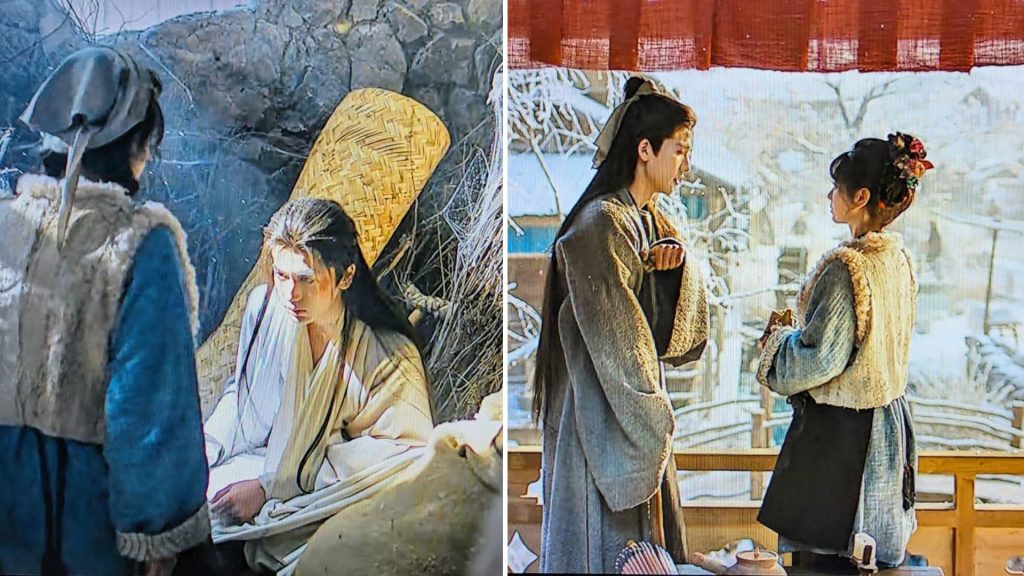
That’s the version of him we first see, someone reserved, carrying more than he says, and used to relying on himself. When he meets a butcher’s daughter in the middle of a snowstorm, he’s already shaped by all of this, already living within those expectations.
And that context matters, because what follows is a gradual shift, simply through being around someone who brings out a different side of him.
The Man in the Matrilocal Marriage
This is where Pursuit of Jade took an interesting turn for me and where Xie Zheng became a character I kept thinking about even after the story ended.
He agrees to marry into Fan Changyu’s household, not the other way around. In a setting where a man’s identity is closely tied to his name, status, and family line, that shift stood out to me. Xie Zheng sets aside his position as the Marquis of Wu’an and lives as Yan Zheng, within her family’s space and structure, something that would usually be seen as a step down for someone like him.
What stayed with me is how he does it. I didn’t see reluctance or quiet resistance. Yes, the marriage begins as part of a larger plan, but the way he lives in that role made me feel like it wasn’t just strategy.
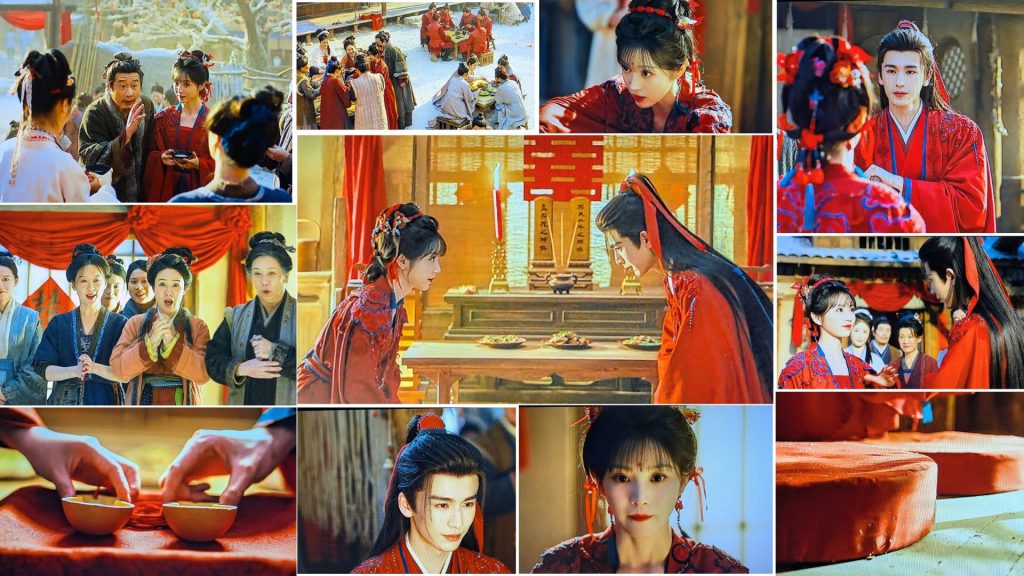
I found myself noticing his willingness to live more simply. He could have treated it as something to endure, just passing time until he could return to his old life. But that’s not what I saw. He adapts. He protects. He contributes. And in those quieter, everyday moments, I started to see a version of him that wasn’t defined by his title, but by how he chose to show up.
Yan Zheng, The Self He Was Finally Allowed to Be
This is the part I keep coming back to.
To me, Yan Zheng doesn’t feel like a mask or a temporary identity that Xie Zheng puts on until his real life resumes. He feels like a version of Xie Zheng that never really had the space to exist before, the person beneath the title, the one that comes through when survival isn’t the only priority.
In the Fan household, I notice a different side of him. He’s softer and more open. There’s a kind of warmth in how he interacts, especially with Fan Changyu, that feels natural rather than calculated. It doesn’t come across as something he’s doing for the sake of the situation, but something he’s slowly allowing himself to feel.
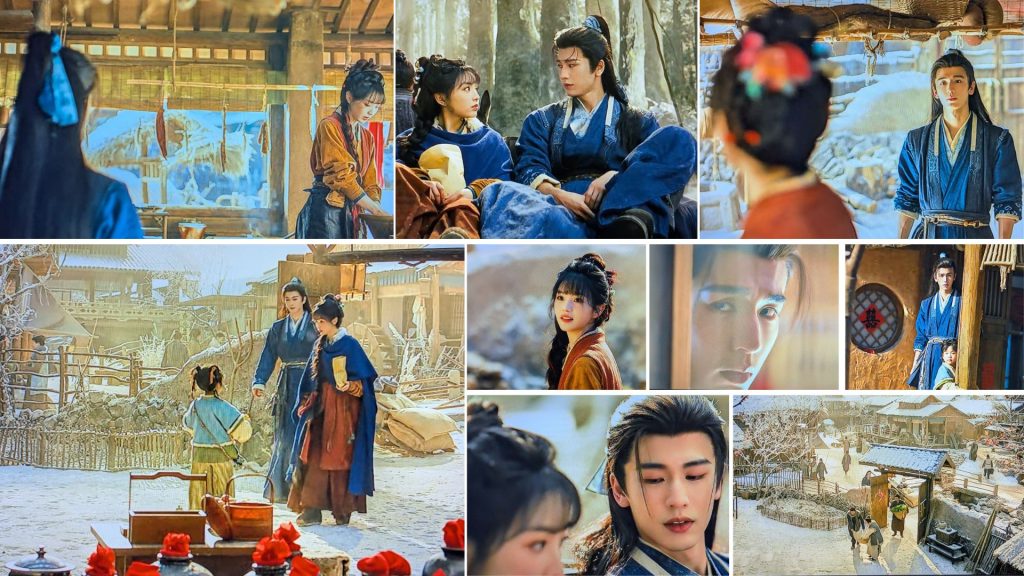
What stood out to me were the quieter, unguarded moments. They didn’t feel exaggerated or out of place. They felt like glimpses of someone who had been holding a lot in for a long time. And I think they land the way they do because we’re aware of everything he carries with him , the loss, the responsibility, the expectations that never really go away.
Maybe that’s why seeing him simply exist in that space, without the same pressure, without needing to perform his role, feels different. The matrilocal home gave him that space, and what stayed with me is that he didn’t resist it. He allowed himself to live in it, even if only for a while.
Because he allowed love, Xie Zheng met his other self and that is one of the things I appreciate about the plot. I wrote more about the love aspect of Xie Zheng and Fan Changyu on this post Why Romance in Pursuit of Jade is Unforgettable. Check it out!
But He Never Forgot Who He Was
What stayed with me is that Xie Zheng doesn’t become a completely different person just because he finds a softer life as Yan Zheng. One doesn’t replace the other. They exist at the same time.
His responsibilities don’t disappear just because he’s found a sense of ease in the Fan household. The loss he carries, his role as a marquis, and everything tied to his father’s memory are still very much part of him. And when the story calls him back to that side of his life, he steps into it without hesitation. To me, that doesn’t make Yan Zheng any less real. It just shows that both sides of him are.
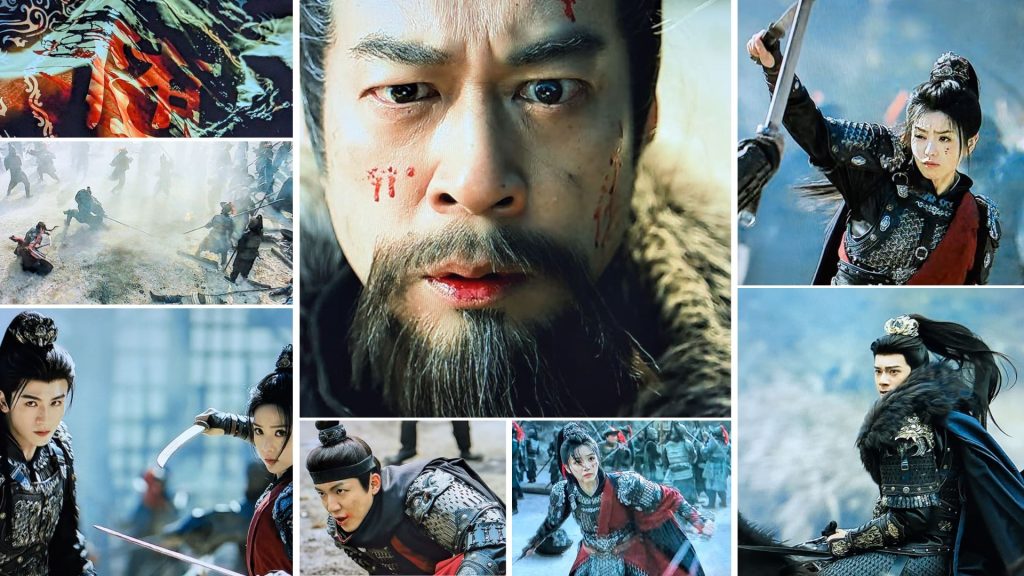
I think that’s what makes him stand out. In a lot of romance dramas, it’s easy for a character to revolve entirely around the relationship, to the point where everything else fades into the background. I didn’t feel that here. Xie Zheng cares deeply for Fan Changyu, but he doesn’t lose sight of his responsibilities, his past, or the role he has to play.
And maybe that’s what makes the character feel complete to me, not because he chooses one side over the other, but because he manages to hold both at the same time.
A Better Xie Zheng, The Man He Chose to Become
Then there’s the ending, which, to me, says the most about who Xie Zheng becomes.
He doesn’t return to the life that was originally expected of him once everything is resolved. He chooses Lin’an. Not because he has to, or because it’s the most strategic decision, but because that’s where he found a sense of peace and belonging, in that household, in that way of living, and beside someone who accepted him as he was. It felt like a conscious choice, not an obligation.
What I found interesting is that choosing Lin’an doesn’t mean stepping away from responsibility. He takes on the role of regent king, which comes with its own weight and expectations. But this time, it doesn’t seem like something that takes over his entire identity. He holds both, leadership and a more grounded personal life, without losing either.
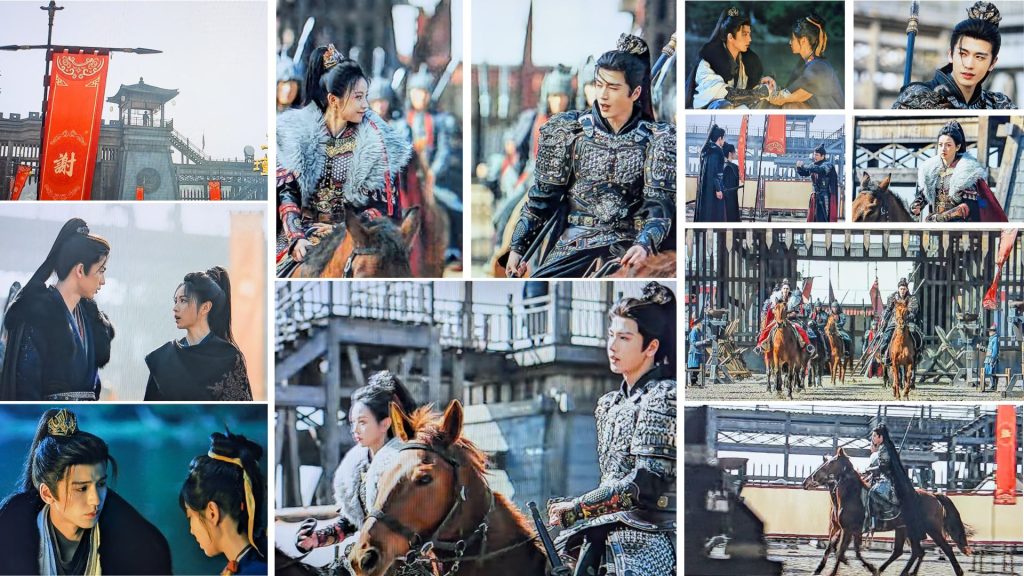
The same balance shows up in his relationship with Fan Changyu. He doesn’t ask her to change or step back once things settle. He allows her to continue on her own path, just as she had always given him space to be himself. That mutual respect stands out, especially in a setting where it could have easily gone the other way.
What Zhang Linghe Brought to It
For me, a lot of this only works because of the performance. Whatever opinions people had about styling or appearance, I found that Zhang Linghe understood the character in a way that comes through naturally on screen.
What stood out to me is how he handled the duality of Xie Zheng and Yan Zheng without making it feel forced or overly obvious. There’s no clear switch, no moment where it feels like he’s playing two separate roles. Instead, the difference comes through in small, subtle ways, posture, tone, the way he holds eye contact, or how relaxed he allows himself to be in certain scenes.
I noticed how easily he moves between those two sides. In one moment, he carries the weight of responsibility and restraint, and in another, he feels more at ease, more present. It never felt exaggerated to me, just consistent and believable.
Why Xie Zheng Stole Our Hearts
By the end of it, I think what drew me to Xie Zheng is something quite simple. He showed that strength and tenderness can exist at the same time. That someone can carry responsibility and still make space for quieter, more personal parts of themselves.
What stayed with me is how he never split himself into just one version. He was both Yan Zheng and Xie Zheng, and neither side cancelled the other out. He could care deeply, be present in small, everyday moments, and still return to the responsibilities that shaped him.
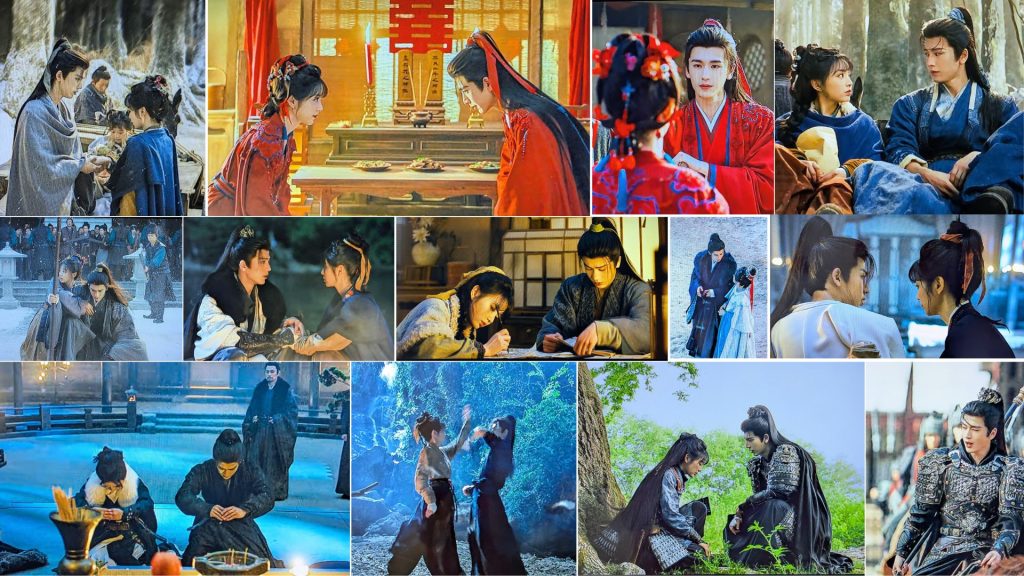
In a genre where characters are often defined by sacrifice, ambition, or revenge, I found it refreshing to watch someone who didn’t have to give up one part of himself to honor another.
Maybe that’s why it stayed with me.
Xie Zheng is a character who stays with me because he represents the ‘rising’ we all hope to achieve in our own lives. He showcased love and resilience. To see the full picture of how these themes intertwine across the entire series, head over to my pillar post, What Pursuit of Jade Taught Me About Strength, Love, and Rising.
(We write our content in the hope of making you, our readers, feel a little more inspired in a time when you’re probably feeling low. We hope you feel a little lighter after visiting our site. Then, we know we’ve served our purpose.⭐)
🍀 Let’s Stay Connected
If this post resonated with you, let’s keep in touch. I share more on:
- ✈️ Travel, cozy cafes, food discoveries, and freelance life on Instagram and Facebook
- 🧠 Mindful productivity, instructional design, and digital business on LinkedIn
- 💻 Plus, I regularly share digital products and courses on all three platforms.
Let’s connect. I’d love to learn about your journey too.
