

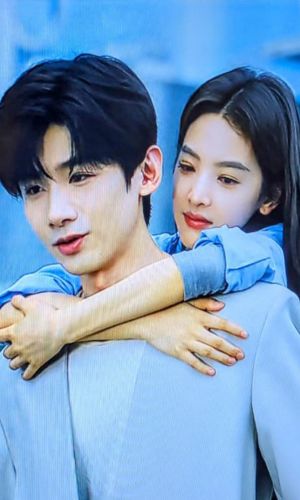
For years, K-dramas were my screen home. I came late to C-dramas, but I’m glad I caved in this 2026. The First Frost was my first foray into Chinese dramas and I couldn’t have asked for a better introduction.
This is my first C-drama reflection and it will definitely not be my last.
The Drama
What is The First Frost About?
It’s a quiet slow-burn love story between Sang Yan and Wen Yifan, two high school friends connected by a past that never really left them. They both carry feelings for each other that neither quite manages to express. It is the purest kind of love, the love that simply shows up.
They part ways in an unexpected and painful way. Eight years pass. When they find each other again, the truth about what really happened begins, slowly and carefully, to surface.
But underneath the love story, running parallel to it, is a harder story. Wen Yifan has been sexually harassed and abused multiple times across her life. She carries the weight of her past trauma, yet throughout the series, she gradually becomes resilient.
On the surface, she might seem timid and passive, but underneath lies a strong, capable woman who faces her fears and moves forward.
Sang Yan’s journey is equally touching. He was heartbroken, feeling that Wen Yifan didn’t truly trust him or want to be with him. Yet, instead of letting bitterness take over, he gradually heals. His love is patient, and his emotional growth is quietly powerful. Watching him reconcile his heartbreak while still choosing to care for Wen Yifan shows a depth of devotion that is both painful and beautiful.
What I loved most is how the story leans into timing. It shows how love isn’t always about whether two people care for each other, but whether life allows them to meet at the right moment, in the right version of themselves.
The Themes
Love Without Expectations
One of the strongest things about The First Frost is how it portrays love that isn’t transactional. Sang Yan doesn’t love Wen Yifan to get something in return. He doesn’t love her for validation, recognition, or even to ease his own loneliness.
- Consistency over drama: He shows up, again and again, through the small, quiet moments. He carries his heartbreak silently but doesn’t let it stop him from caring for her.
- Actions over words: He expresses love in gestures, attentiveness, and understanding, rather than making grand declarations.
- Emotional risk: Loving without expectation requires vulnerability. Sang Yan trusts that his care matters, even if it isn’t reciprocated immediately.
This theme resonates deeply because in real life, we’re often taught to guard our hearts, to measure our giving, to protect ourselves from disappointment. Watching Sang Yan love freely, patiently, and selflessly is both comforting and aspirational. It makes you pause and wonder if love could ever be this pure outside of a story.
Being Brave in a Quiet Way
Both Wen Yifan and Sang Yan embody a kind of bravery that doesn’t shout. It’s subtle, measured, and deeply human.
- Wen Yifan: Though she appears timid or passive at first, she faces her past trauma and slowly becomes resilient. Her courage isn’t about dramatic confrontations; it’s about showing up, healing, and choosing to move forward.
- Sang Yan: His bravery is emotional. He loves someone who once hurt him, navigates heartbreak, and still chooses to be present and patient. He doesn’t force things or demand recognition. He simply acts with quiet courage.
This theme is so relatable because life often calls for this type of courage. Being brave doesn’t always mean making bold moves; sometimes it’s about standing steady in the face of vulnerability, trusting the process, and showing love through actions rather than words.
The Lessons
Three Things The First Frost Taught Me
Lesson 1: Pure love is not naive, but it is the most courageous kind.
Sang Yan loves in a way that the world does not particularly reward. He does not perform his love. He does not negotiate it or condition it or use it as leverage. He expresses it in the smallest, most unglamorous ways, in concern, in attention, in the willingness to ease someone’s pain without needing them to know it was him.
This kind of love, quiet, undemanding, genuine, is admirable. To love without performance, without guarantee, without the protection of playing it cool, that requires more courage than almost any other way of being in the world.
Take this with you.
Think of the last time you expressed care for someone without needing them to know it was you, or without needing anything in return. How did that feel? Is there someone in your life you love in this quiet, unperforming way and have you let them know?
Lesson 2 : Resilience is not the absence of damage, but it is continuing to love despite it.
Wen Yifan has been hurt in the most violating ways by people who should have protected her, in situations where she had no power. The drama does not pretend this did not happen or did not matter. It shows the weight of it, how it shapes her, how she carries it, how it is present in the way she moves through the world.
And yet she remains capable of love. The drama’s argument is not that trauma does not leave marks because it clearly does. The argument is that a person can carry marks and still be whole. Still be open. Still be capable of the most courageous kind of love.
Take this with you.
What have you carried that has not reduced your capacity to love that you survived and came through still open? That survival deserves to be acknowledged, not just moved past. Name it, even just to yourself.
Lesson 3: Some truths take years to surface and arrive exactly when they are needed.
Eight years pass between the first parting and the reunion. Eight years in which both characters lived with an incomplete story, a version of events shaped by what they did not know, could not know, were not allowed to know. The truth that finally surfaces does not arrive easily or quickly. It comes in fragments, through persistence, through people finally willing to say what they should have said long ago.
What moved me about this part of the story is the precision of the timing. The truth arrived when they were ready for it, not when it would have been convenient, not when it would have caused the least pain, but when both of them had become the people who could receive it and do something real with it.
It is something I have found true in my own life, that certain understandings cannot arrive before their time. The question that seemed unanswerable at thirty makes sense at thirty-eight. The wound that felt permanent at eighteen clarifies into a lesson at twenty-eight .
Some truths have their own timeline.
Take this with you.
What is something you are currently waiting to understand, a situation, a relationship, a chapter of your life that has not yet resolved into meaning? What if the understanding is not late, what if it is simply not yet time?
Go Deeper
Journal Prompts to Sit With This Week
Journal Prompts: Sit With These
1. Is there someone in your life you love in the quiet, unperforming way Sang Yan in The First Frost loves showing up in small concerns, easing pain without announcement? Have you let them know, in whatever language works for both of you?
2. What truth in your own life is still arriving still taking its time, still assembling itself from fragments? What would it mean to trust that timeline rather than forcing the understanding before it is ready?
3. Think about something you have survived that you expected would reduce your capacity to love or trust or be open. Did it? Or are you, like the girl in this drama, still carrying the original quality of your love alongside everything the years have added to it?
A Final Thought
I came to C-dramas because I wondered what they would offer that K-dramas could not. I did not expect the answer to be…TIME.
Not more time, the same twenty-four hours, the same episodes, the same story beats. But a different relationship to time within the story. The First Frost stayed with me with its characters for 32 episodes.
It never once felt long.
I know that the modern way to watch a drama is to binge it, to surrender a weekend, to let episode follow episode without pause, to stay up until you reach the resolution.
But I have found, over years of watching K-dramas and now this first C-drama, that the stories that mean the most to me are the ones I watched slowly. The ones where I sat with an episode for a day before moving to the next. Where I let a scene stay in my mind, let a feeling settle, let a question the drama opened stay open for a while before seeking the answer.
That patience, in the drama, and in the watching of it, is itself a lesson about how to be in the world. Not every feeling needs to be resolved quickly. Not every story needs to be finished before it has been fully felt.
New here? Welcome, this is how I watch dramas!
Snippets of Wonders is a space for people who believe that how you pay attention to a story is how you pay attention to life. If The First Frost made you feel something worth thinking about, there is more here.
👉 [Back to The Drama Classroom]
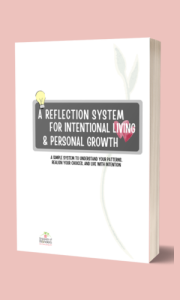
Stories like this always make me reflect on my own life, choices, and patterns. I’ve turned this into a simple reflection system you can use here: A Reflection System for Intentional Living & Personal Growth Printable for $5.95.
(We write our content in the hope of making you, our readers, feel a little more inspired in a time when you’re probably feeling low. We hope you feel a little lighter after visiting our site. Then, we know we’ve served our purpose.⭐)
🍀 Let’s Stay Connected!
If this post resonated with you, let’s keep in touch. I share more on:
- ✈️ Travel, cozy cafes, food discoveries, and freelance life on Instagram and Facebook
- 🧠 Mindful productivity, instructional design, and digital business on LinkedIn
- 💻 Plus, I regularly share digital products and courses on all three platforms.
Let’s connect. I’d love to learn about your journey too.
