

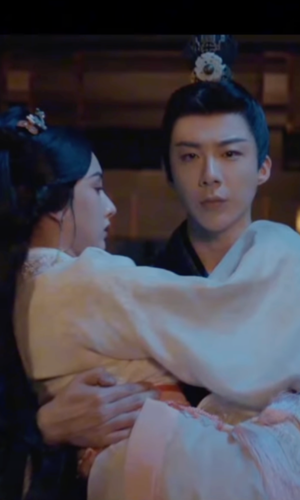
Not the title. Not the status. The willingness to choose something harder than revenge.
The word magnanimous comes from the Latin magnus animus…a “great soul.”
Not great power, wealth, or status, but greatness of spirit. And that distinction matters.
Set in the imperial court of ancient China, a world driven by hierarchy, power, and prestige, The Prisoner of Beauty holds firmly to this idea with striking clarity throughout its story.
Having watched many period dramas, I’ve seen how often they revolve around power, who holds it, who desires it, and how far one will go to gain or protect it. But this drama asks a rarer, more difficult question: what does one do with power once it is theirs?
Is it used to settle old scores, defend pride, or claim what is owed? Or is it willingly set aside, at real personal cost, in service of something greater?
That question, what it truly means to be magnanimous, not as a label but as a lived, daily choice, is what stays with me long after the story ends.
The Drama
What The Prisoner of Beauty Is About
In one sentence
It’s an enemies-to-lovers historical romance where a forced marriage between rival clans turns into a powerful alliance that changes both their hearts and their world.
Main Plot
The story centers on Xiao Qiao, a sharp and resilient woman of the Qiao family, who is bound in a strategic marriage to Wei Shao, the formidable and distant leader of the rival Wei clan. Their union is designed to mend a long history of conflict between their families.
In the beginning, their relationship is marked by suspicion and guarded intentions, as both carefully navigate political intrigue, warfare, and the pressures of their respective families.
Enemies to Lovers
As they weather crises side by side, from family disputes to threats against the realm, the walls between them begin to crumble. Their arranged marriage evolves into a powerful partnership defined by respect, empathy, and love.
Bigger Stakes
More than just a love story, the series explores:
- The struggle to restore peace in a fractured, war-torn world
- Fierce battles for power between opposing clans
- Calculated political moves and the weight of leadership
- The emotional clash between obligation and the heart
The Lessons
What Magnanimity Actually Looks Like
Lesson 1 : True leadership is not about power. It is about what you are willing to give up.
In the world of The Prisoner of Beauty, power is easy to recognise. It belongs to those who command armies, build alliances, and hold the authority to destroy their enemies without consequence.
But magnanimity looks different.
Wei Shao embodies this contrast. Though he has every reason and every means to act on vengeance, especially given the history between the Wei and Qiao families, he repeatedly holds back. Not out of weakness, but out of choice.
This is what makes the drama feel radical. In a court where strength is measured by how much you can control, it shifts the lens entirely. Leadership is not about accumulation, but sacrifice.
Who is willing to set aside personal grievances for peace? Who chooses the harder path when pride demands otherwise?
The Prisoner of Beauty places its faith in that kind of leader, the one strong enough not to act on every right they have.
Take this with you.
Think about the leadership you carry, formally or informally, in your workplace, your family, your community. Where have you recently had the power to take something, credit, revenge, advantage, and chosen not to? What did that choice cost you? What did it build?
Lesson 2: Letting go of grudges is not forgiveness of the other person. It is freedom for yourself.
One of the things I love most about The Prisoner of Beauty’s treatment of magnanimity is its honesty about how hard it is. Wei Shao does not let go of grudges because he has ceased to feel the wrong. The drama does not pretend he is above injury or indifferent to injustice. He feels it, clearly, specifically, in the ways that only someone who has been genuinely wronged can feel it.
What he chooses, repeatedly, is to not act from that feeling. Not because the feeling is wrong or the grievance is illegitimate. But because he understands something that most of us take years to learn, if we learn it at all, that carrying a grudge is not a form of justice. It is a form of continued imprisonment.
The person who wronged you has already taken something from you. Holding the grudge gives them your present as well as your past. Letting go, which is not the same as excusing, not the same as forgetting, not the same as pretending the wrong did not happen is the act that returns you to yourself.
Take this with you.
What grudge are you currently carrying that is costing you more than the person who caused it? Not to excuse them to free yourself. What would letting go actually look like in practice, in your specific situation?
Lesson 3: Love that is greater than self is the rarest and most demanding kind and the only kind worth building a life around.
In The Prisoner of Beauty, the love story is inseparable from the question of leadership. Through Xiao Qiao and Wei Shao, the drama suggests that the capacity to lead well and the capacity to love deeply come from the same place, the ability to put something greater than oneself first.
Their relationship is not driven by ease or romance alone, but by repeated acts of restraint. Both carry wounds, history, and reasons to hold on to pride, yet they choose, again and again, to step back from it.
What emerges is a form of love that is not self-serving, but self-aware. One that recognises ego, grievance, and the desire to be right, yet refuses to let them take precedence.
It is a demanding vision of love. One that asks for sacrifice, for humility, for the courage to prioritise another person’s wellbeing over personal satisfaction.
And in that sense, it may be one of the most honest portrayals of love the genre has offered in a long time.
Take this with you.
Think about the person you love most. In your relationship with them, are you loving from fullness or from need? Are there places where your ego, your wound, or your desire to be right is taking precedence over what they actually need from you? What would love that is greater than self look like in practice in one specific area of that relationship?
Lesson 4: Pettiness is always a choice and so is its opposite.
The court in The Prisoner of Beauty is not just shaped by grand schemes, but by small-minded decisions. Officials cling to grudges, take quiet revenge, and use their authority to belittle those who cannot fight back.
Consider how Xiao Qiao is often treated in the early stages of her marriage, judged, tested, and at times deliberately placed in difficult positions because of her family name. These actions are not driven by necessity, but by ego and lingering resentment.
What sets the central story apart is how it responds to this environment. Wei Shao, shaped by years of conflict, could easily mirror the same behaviour. Instead, there are turning points where he chooses not to act on anger, not to retaliate, and not to let past grievances dictate present decisions.
The drama makes it clear that rising above pettiness is not something reserved for a certain kind of person. It is a choice, one that must be made repeatedly, often at personal cost.
Wei Shao’s growth reflects this. He is not inherently magnanimous, he becomes so through restraint, through reflection, and through the difficult act of choosing differently each time.
And in that, the story offers something hopeful, that magnanimity is not a trait, but is a discipline.
Take this with you.
Where in your life are you currently choosing pettiness even in small ways? A withheld compliment, a nursing of a small grievance, a choice to let someone feel the consequences of crossing you when grace was also available? Name it honestly. Then ask, what would the larger version of yourself do instead?
Beyond the Imperial Court
What This Looks Like in a Life That Is Not Ancient China
At first glance, the world of The Prisoner of Beauty, with its court rituals, rigid hierarchies, and political alliances, can feel far removed from everyday life. But in reality, that setting makes its message clearer, not more distant.
Because beneath the titles and traditions, the story is about something deeply familiar, what we do when we hold power over someone who has hurt us.
And those moments are not rare. They show up in quiet, ordinary ways, at work, within families, in friendships, in relationships. Any time we have the ability to make someone feel the weight of what they did, we are placed in that same position of choice.
Wei Shao rules a state, but the kind of restraint he learns is not limited to rulers. It’s the same restraint we practice when we choose not to embarrass a colleague who undermined us, not to distance ourselves from a friend who let us down, not to reopen a wound with someone who has already tried to make things right.
The scale is different. The choice is the same.
Go Deeper
Journal Prompts on Magnanimity
1. Where in your life, your work, your relationships, your community, are you currently governing from a wound? Where is an old grievance shaping present decisions in ways you have not fully acknowledged? What would it look like to govern from your values instead?
2. Think of the person in your life whose leadership you most admire, not for their power or their title but for their quality of character. What specifically do they do that earns that admiration? And what would it mean to practice one of those qualities more deliberately in your own leadership, however small or informal?
3. What is the one relationship in your life where love that is greater than self is most needed right now and most difficult? What specifically would it require you to give up? And what do you believe it would build if you gave it?
10 Practical Ways to Cultivate Magnanimity
- Pause Before Reacting
- When someone wrongs you, take a breath before responding. Ask yourself: Will retaliation improve the situation, or just satisfy my ego?
- Example: Like Wei Shao choosing restraint instead of punishing Xiao Qiao’s critics in court.
- Prioritize Understanding Over Being Right
- Seek to understand others’ motives rather than focusing on proving yourself correct.
- Example: Xiao Qiao often listens and observes before acting, even when her family’s honor is at stake.
- Let Go of Small Grudges
- Don’t carry minor offenses or past slights. They drain energy and prevent growth.
- Example: Characters in the drama often hold grudges, the magnanimous choose to forgive or release.
- Serve a Greater Purpose
- Align your actions with something bigger than personal gain, family, community, or shared goals.
- Example: Wei Shao frequently prioritizes the peace of the state over personal revenge.
- Practice Empathy
- Put yourself in the other person’s shoes before acting. This softens pride and encourages compassion.
- Example: Xiao Qiao understanding her political adversaries’ fears and adjusting her approach.
- Resist the Need for Public Validation
- Magnanimity isn’t about appearances. Act with integrity even when no one is watching.
- Example: Quiet decisions Wei Shao makes to spare someone from humiliation, without seeking credit.
- Choose Long-Term Peace Over Short-Term Satisfaction
- Ask yourself: Will this action improve the situation in the long run, or just give me immediate satisfaction?
- Example: Avoiding a heated confrontation that could escalate conflict unnecessarily.
- Acknowledge Your Own Wounds
- Recognize your hurt, but don’t let it dictate your actions.
- Example: Both Xiao Qiao and Wei Shao carry past wounds but choose restraint over retaliation.
- Give Without Expecting Return
- Generosity and support should be genuine, not transactional.
- Example: Supporting an ally or subordinate even when it offers no immediate benefit to oneself.
- Reflect Daily on Your Choices
- At the end of each day, consider moments where you acted magnanimously or could have.
- This helps build the habit of choosing the harder, more virtuous path over time.
A Final Thought
The Prisoner of Beauty may be filled with visual splendour, but its truest beauty is internal.
Not in the setting, but in the person who chooses restraint over revenge, humility over ego, and love over being right.
Real magnanimity happens in the choices no one witnesses. In letting go of a score you could have settled. In deciding that your character matters more than your victory.
A great soul.
That is the kind of beauty this story reveals and the kind I find myself still learning to practice, in small, imperfect, everyday choices.
Where could choosing restraint over revenge change your relationships, your work, or your daily interactions?
👉 [Back to The Drama Classroom]
(We write our content in the hope of making you, our readers, feel a little more inspired in a time when you’re probably feeling low. We hope you feel a little lighter after visiting our site. Then, we know we’ve served our purpose.⭐)
🍀 Let’s Stay Connected!
If this post resonated with you, let’s keep in touch. I share more on:
- ✈️ Travel, cozy cafes, food discoveries, and freelance life on Instagram and Facebook
- 🧠 Mindful productivity, instructional design, and digital business on LinkedIn
- 💻 Plus, I regularly share digital products and courses to support freelancers, educators, and startups on all three platforms.
Let’s connect. I’d love to learn about your journey too.
