

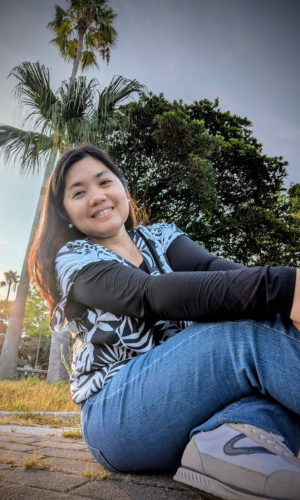
There’s a concept in anthropology called the fish-and-water problem and the idea is that a fish has no concept of water, not because it isn’t aware of it, but because it’s all the fish has ever known. Water has surrounded it its entire life so completely that it becomes invisible.
And it wasn’t until I left the Philippines in 2008 that I realized I had been that fish all along. It took leaving home to step outside the “water” I had been swimming in my whole life. As I adapted to new places, I found myself asking, Why do I do things this way? Why do I believe this? Is this true for everyone or is it simply what I grew up with?
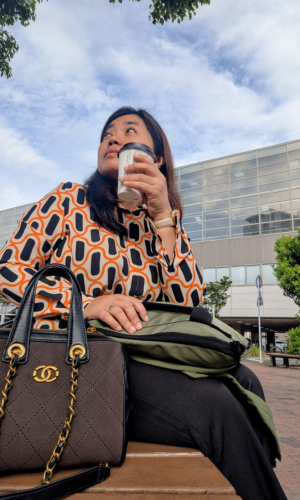
Living abroad taught me about my blind spots.
Since 2008, I’ve spent eight years living in Brunei, ten years in Sri Lanka, and have taken two solo trips lasting 60 days each, navigating unfamiliar places, cultures, and people on my own. Now, I’ve started another chapter in Japan, where I’ll be living and teaching for the next year.
Each country, each journey, and each conversation has given me a new perspective. The more time I spent living abroad, the more clearly I could see the life I had come from.
Looking back, what living abroad taught me about my blind spots is that sometimes, the only way for me to truly understand my own worldview was to experience someone else’s.
First, What a Blind Spot Actually Is
And Why We Cannot Find Ours Without Leaving
Blind spots.
When I say blind spots, I don’t mean a lack of knowledge.
Not knowing something is easy to fix. You can read a book, take a class, or ask someone who knows more than you do.
A blind spot is different.
It’s something you’ve believed for so long that you don’t even realize it’s a belief anymore. It’s just the way things are. It becomes your normal and the lens through which you see the world.
That’s why living abroad can be such a powerful teacher. When you’re surrounded by people whose “normal” is different from yours, your own normal suddenly comes into focus. You begin to notice things you never could have seen while you were still swimming in your own water.
It’s not because one culture is better or wiser than another. It’s because every culture has its own way of doing things, its own values, priorities, and ideas about what matters.
My education in my own blind spots happened across three countries and three very different frameworks for understanding love, attachment, and what it means to live well. I want to share all three, because together, they tell a story about how profoundly a life lived across cultures can change the most fundamental things you believe.
Three Countries, Three Philosophies
How Each Place Showed Me What I Was Carrying
🇵🇭 The Philippines – Catholicism and Sacrificial Love
I grew up believing that love meant sacrifice and that the measure of love was how much you were willing to give up for the people you loved.
This is the love I was raised in, the Catholic understanding of love as sacrifice, as total self-giving, as the willingness to do anything for your family and your loved ones. It is a beautiful and genuinely moving philosophy. It creates extraordinary loyalty, extraordinary commitment, extraordinary community.
Filipino family bonds are among the strongest I have encountered anywhere in the world. But living outside it revealed the blind spot it had given me. I had absorbed, without quite realising it, the belief that putting yourself last was a virtue. That needing things for yourself was selfish. That love which cost you nothing was not really love at all. These are not wrong beliefs exactly, but they are incomplete ones.
And I did not know how incomplete they were until I lived somewhere that held a different truth.
The questions this experience opened for me were
What did your upbringing teach you that love requires of you? Is that belief still serving you or is it costing you things you did not consciously agree to give?
🇧🇳 Brunei Darussalam – Islam and Trusting the Plan
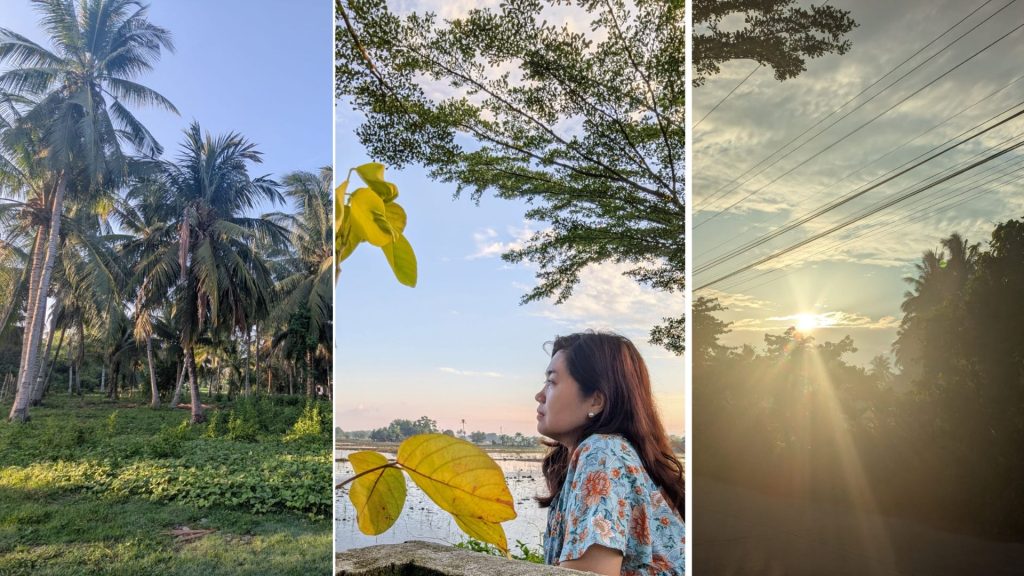
In Brunei, I taught in a Muslim-majority culture and encountered, for the first time as a lived reality rather than an abstract concept, the practice of tawakkul. That is trusting in God’s plan, releasing attachment to outcomes, finding peace in surrender rather than control.
What this culture showed me about myself was how tightly I held things. How much of my energy went into managing, planning, controlling outcomes, trying to secure the future through effort and preparation. The Filipino version of love I had been raised in was active. You showed love by doing, by sacrificing, by making things happen. In Brunei I encountered a gentler, more patient philosophy and that some things are not yours to control and that releasing them is not failure but faith.
It did not convert me to a different religion. But it opened a question I had never thought to ask. What would it feel like to trust genuinely, not just as a coping mechanism, that some things are not mine to carry? That surrender is sometimes the most intelligent response available?

🇱🇰 Sri Lanka – Buddhism and the Inward Turn
Sri Lanka introduced me to a philosophy of love that was the most challenging of the three and ultimately the most transformative. The Buddhist understanding that love begins inward, that true love requires knowing yourself first, and that attachment, even to the people and things you love most is the source of suffering.
What makes you happy will also give you pain. This is not a pessimistic statement in the Buddhist framework, but it is a precise and compassionate one. If your happiness depends on a particular outcome, a particular person behaving in a particular way, a particular thing remaining as it is, then you have made your peace contingent on something you cannot control.
Living in Sri Lanka, watching this philosophy lived from the inside by people who had absorbed it across generations, I began to understand what my previous versions of love had cost me. The Catholic version had sometimes made me a martyr to my own giving. The sacrificial love that puts itself last can slide, without noticing, into resentment and depletion.
Buddhism asked me a harder question. What if the most loving thing you can do for yourself and for the people you love is to practice non-attachment? To love fully without making your wellbeing depend on the outcome? To practice tough love even on the ones you love most, precisely because you love them?
Three religions. Three philosophies of love. Each one true. Each one incomplete without the others. And none of them visible to me until I had lived inside all three.
What All Three Taught Me Together
The Blind Spots That Only Showed Up in Combination
No single country gave me a complete philosophy. What living across all three revealed is that the most important truths about love and attachment are not held by any one tradition. They are distributed across them and I needed all three to see the full picture.
1. I had confused self-sacrifice with love.
The Catholic framework gave me extraordinary capacity for giving. It also gave me a blind spot. I had learned to equate love with self-erasure, and to feel guilty about my own needs. Sri Lanka’s Buddhist framework showed me that you cannot pour from an empty vessel, that the inward turn, the care for yourself, is not selfishness but the foundation of sustainable love.
2. I had confused control with care.
Growing up in a culture where love expressed itself through doing, through sacrifice and effort and making things happen. I had unconsciously absorbed the belief that caring for someone meant managing their outcomes. Brunei showed me the relief of release. That trust is also an act of love. That sometimes the most caring thing is to stop trying to fix what is not yours to fix.
3. I had not understood that what gives you happiness will also give you pain.
This is perhaps the most difficult lesson and the most Buddhist. Every attachment is a vulnerability. Every love is a potential grief. This is not a reason to love less. It is an invitation to love differently, with open hands rather than clenched ones. With full presence rather than anxious management. To let the people you love be who they are, not who you need them to be for your own peace.
4. I had not understood that tough love is still love.
The Buddhist practice of non-attachment includes the willingness to practice tough love even on the ones you love most. The ability to say I love you and I will not enable what is harming you. I love you and I cannot carry what is yours to carry.
5. Home is not a place, but a set of assumptions I carry everywhere.
The deepest blind spot of all is that what I thought of as simply reality was, in fact, my home culture’s particular way of organising reality. The assumptions I carried about love, family, obligation, self, and meaning were not universal. They were Filipino, Catholic, shaped by a specific geography and history and community. Knowing this does not mean abandoning them. It means holding them more consciously and choosing them rather than simply inheriting them.
Go Deeper
See your own water
You do not need to have lived abroad to have blind spots. But these questions work best when you answer them honestly, not with the answer that sounds enlightened, but with the one that is actually true for you right now.
What are your blind spots?
- What did your upbringing teach you that love requires of you and of the people you love? Is that still what you believe, or has life shown you a different truth? Where do those two versions of love create tension in you?
- What are you most attached to right now, a person, a plan, an identity, an outcome? What would it mean to love that thing with open hands rather than clenched ones? What specifically are you afraid would happen if you loosened your grip?
- What is one belief you hold that you have always treated as simply true, as common sense, as how things are, that might actually just be your culture, your family, your particular upbringing? What would it mean to examine that belief as a belief rather than as reality?
A Final Thought
I am still learning from all three philosophies. I do not think I will ever finish.
The Catholic framework gave me the capacity for deep, committed, sacrificial love and I do not want to lose that. The Islamic framework gave me the practice of release, of trusting what is not mine to control and I carry that with me now in ways I did not before Brunei. The Buddhist framework gave me the most difficult and most liberating lesson, that love without attachment is not love without depth. It is love without chains. And that the inward work knowing yourself, owning yourself, making sure nothing owns you is not selfish. It is the foundation of everything else.
You can find versions of this education in books. But you find the living version of it only by living by putting yourself in places that hold different truths, staying long enough for those truths to ask real questions of you, and being honest enough with yourself to let them change something.
Which of the three philosophies of love resonated most with where you are right now?
(We write our content in the hope of making you, our readers, feel a little more inspired in a time when you’re probably feeling low. We hope you feel a little lighter after visiting our site. Then, we know we’ve served our purpose.⭐)
🍀 Let’s Stay Connected
If this post resonated with you, let’s keep in touch. I share more on:
- ✈️ Travel, cozy cafes, food discoveries, and freelance life on Instagram and Facebook
- 🧠 Mindful productivity, instructional design, and digital business on LinkedIn
- 💻 Plus, I regularly share digital products and courses to support freelancers, educators, and startups on all three platforms.
Let’s connect. I’d love to learn about your journey too!
