

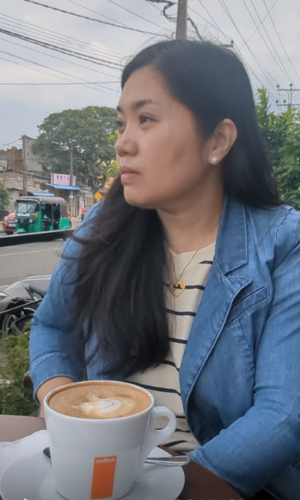
Brunei was my first posting abroad. I arrived as a young Filipino teacher, the eldest in my family, shaped by necessity, driven by goals, motivated by the very real need to build something. I knew why I worked hard. I thought I understood why other people did too.
My students were 17 to 20 years old. Polite, quietly observant and I knew then that they watched me carefully.
To get to know them and to practice their English, I asked them to create vision boards. To deliver presentations about any topic they chose. To show me their dreams in their own words.
I assumed my students wanted what I had wanted at their age, security, success, a career that would open doors. I assumed ambition looked the same everywhere. I assumed that if I gave them the tools to dream bigger, they would want to use them.
I was wrong and being wrong was the best thing that ever happened to me as a teacher.
This is the cultural mistake I made in my first year of teaching in Brunei and what it taught me.
The Presentation that Stopped Me
One student stood up and presented about Mecca and Medina.
He spoke carefully, with obvious reverence about the holy sites, the significance of the pilgrimage, what Hajj means in the life of a Muslim. He wasn’t performing for a grade. He was sharing something sacred. Something that organized his entire understanding of what a good life looked like.
When he finished, he looked at me and asked, genuinely, openly, “Miss, do you want to visit Mecca?”
I said yes. Because in that moment, moved by his presentation, I meant it.
He nodded and said, simply, “But you have to be a Muslim.”
The classroom went quiet. I smiled and said “I see.”
And in that silence, something in me shifted permanently.
What I Understood in That Quiet
He wasn’t excluding me. I understood that immediately and I have understood it more deeply every year since.
He was including me. He had just shared the most important dream of his life, not a career, not a salary, not a title, but a spiritual journey he was working toward with everything he had. Graduate. Find good work. Save enough. Go to Mecca. That was his dream. That was his north star.
And he had cared enough about his teacher to invite her into it, to ask if she wanted to go too.
The quiet boundary he drew wasn’t rejection. It was honesty. The kind of honest, uncomplicated truth that a student offers a teacher when they feel safe enough to simply be themselves in the room.
I had walked in thinking my job was to expand their dreams. I left that day understanding that some of my students already knew exactly who they were and what they were living for and that it was not my place to suggest that wasn’t enough.
The Assumption I Carried and Left Behind
I grew up as the eldest child in a Filipino family. That shapes you in particular ways. You learn early that ambition is survival, that goals are lifelines, that success means being able to take care of the people behind you.
I carried that framework into Brunei without examining it.
When students didn’t respond to goal-setting activities with the urgency I expected, I initially read it as lack of motivation. When their vision boards didn’t look like mine, I quietly wondered if I needed to inspire them more.
What I was actually encountering was a different, not lesser, relationship with time, purpose, and enough.
Brunei is a monarchy with deep Islamic roots. Compliance, community, and spiritual life are not obstacles to ambition. They are the architecture of a well-lived life for many of my students. Their measure of success was simply different from mine.
No one is better over the other. We are all just different. That sounds simple. It took me a full year of teaching abroad to actually believe it.
What I Changed and What It Gave to My Classroom
After that presentation I became more mindful. Not more careful in a defensive, walking-on-eggshells way, but more genuinely curious. More willing to create space for my students to bring their whole lives into the room.
I stopped designing activities around what I assumed they wanted to express. I started designing activities that simply asked them to express, whatever it was, wherever it came from.
And something remarkable happened. They gave me more. Not because I had pushed them toward bigger ambitions, but because I had stopped implying that their ambitions needed to be bigger.
The vision board activity became richer. The presentations became more personal. The classroom became a place where a 17-year-old boy could stand up and talk about Mecca with the same seriousness that another student might talk about becoming an engineer and both would be received with equal respect.
That is the classroom I want to be in. That is the classroom I now know how to build.
The Lesson No Training Manual Covers
You can read every book on culturally responsive teaching. You can complete your TESOL certificate, your masters, your professional development hours. And you will still walk into your first classroom abroad carrying assumptions you don’t know you have.
That is not a failure. That is the beginning of the real education.
This cultural mistake I made in Brunei was not dramatic. There was no terrible incident, no offense taken, no relationship broken. My mistakes were quieter than that, they lived in my expectations, my assumptions, my unexamined belief that I knew what my students should want from their lives.
What corrected me was not a reprimand. It was a student standing at the front of a classroom, speaking about the holiest place on earth, and asking his teacher if she wanted to go there too.
No need to impose your beliefs on your students even when you are the one in authority. Welcome their ideas. Welcome their beliefs. Make them feel safe enough to express both.
That is not just good cultural practice. That is good teaching. Everywhere. Always.
A Reflection for You
What assumption did you carry into your first classroom abroad, or even your first classroom at home, that a student quietly dismantled for you? I’d love to hear it in the comments.
(We write our content in the hope of making you, our readers, feel a little more inspired in a time when you’re probably feeling low. We hope you feel a little lighter after visiting our site. Then, we know we’ve served our purpose.⭐)
🍀 Let’s Stay Connected
If this post resonated with you, let’s keep in touch. I share more on:
- ✈️ Travel, cozy cafes, food discoveries, and freelance life on Instagram and Facebook
- 🧠 Mindful productivity, instructional design, and digital business on LinkedIn
- 💻 Plus, I regularly share digital products and courses to support freelancers, educators, and startups on all three platforms.
Let’s connect. I’d love to learn about your journey too!
